
Flow velocity
Principle of measurement
The contact-free measurement of the flow velocity is based on the principle of the Doppler Effect. The integrated velocity radar sensor transmits a signal with a constant frequency in a specific angle towards the water surface (see Figure 3). There, the signal is reflected and shifted in frequency due to the movement of the water body. The reflected signal is received by the antenna of the integrated velocity radar sensor. By comparing the emitted frequency to the frequency of the reflected signal from the water surface the local velocity can be determined.
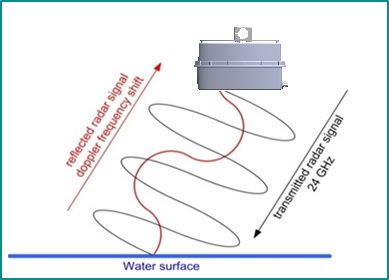
Figure 3 Principle of flow velocity sensor
Flow direction separation
Water can either flow towards or away from the integrated velocity radar sensor. Depending on the flow direction a frequency shift to higher or lower frequencies occurs. This circumstance allows the SQ sensor to separate the water movements by their directions and to separately evaluate the corresponding velocity distribution.
Inclination angle measurement
As the SQ sensor is directed in a specific angle towards the water surface an angle correction has to be applied. The SQ measures its vertical inclination with an internal sensor and applies an automatic angle correction.
Conditions of the water surface
The water surface has to move distinctly and a minimum roughness has to be present to measure a discernible Doppler frequency shift. The more rippled the water surface and the higher the flow velocity is the more reliable the measurements are. The minimum ripple height for a valid analysis is about 2 mm depending on the used frequency. For very slow moving rivers this requirement might not be fulfilled and a continuous and correct velocity measurement cannot be guaranteed.